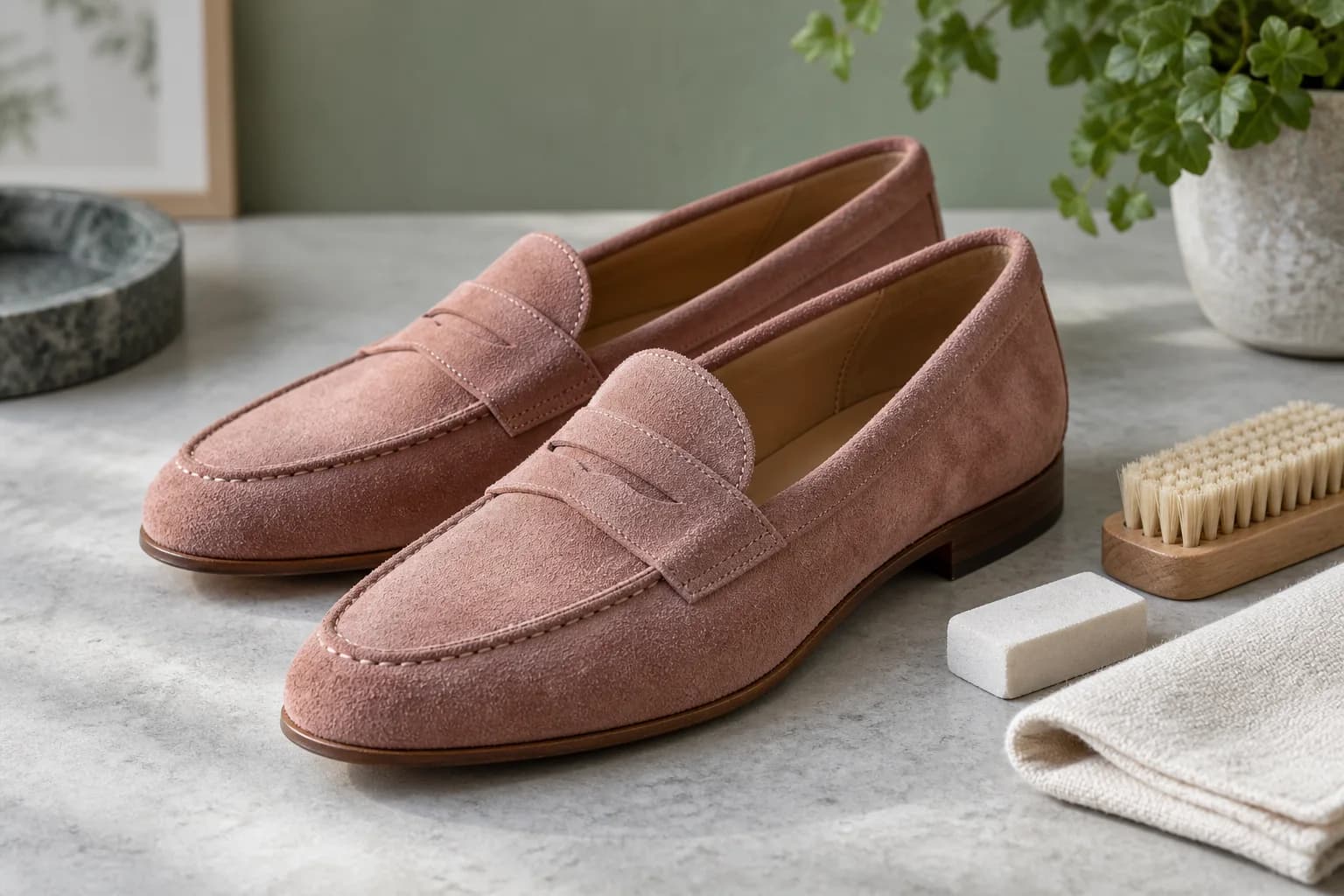
Suede and nubuck look different from smooth leather because their surfaces have a raised nap. Dirt can sit between those fibres, while pressure can flatten them and change the way they catch the light. A darker patch is not automatically permanent damage.
This guide covers ordinary surface dust and light marks. Oil, dye transfer, mould, and deep water rings call for a more specific assessment.
Let damp shoes dry first
Keep wet suede away from radiators, hair dryers and strong sunlight. Blot excess moisture gently without rubbing. Support the shape with plain absorbent paper, changing it if it becomes damp. Allow the material to dry naturally before brushing. Wet fibres are easy to distort.
Do not use the hidden water-drop test to identify suede. Its nap already tells you that ordinary smooth-leather creams are unsuitable.
Brush gently, then inspect
Choose a brush intended for suede and follow the shoe maker's recommendation. Start with its softer side. Brush a small area with light strokes, then compare the nap from different angles. Strong wire brushing can damage fine suede, stitching and painted details.
Work across the whole shoe so that you do not leave one conspicuously brushed patch. If loose dirt is coming away, repeat gently. Stop when continued brushing no longer improves the surface.
Use an eraser for light local marks
A suede eraser can lift some dry marks. First try it on a discreet area. Apply very light pressure and brush away the residue. Do not keep grinding at a stain that is not changing; friction may abrade the fibres before it removes the mark.
A shiny area can mean flattened nap, but it may also be polished wear. Brushing cannot replace fibres that are no longer there.
When a liquid cleaner makes sense
Dry methods are a starting point, not an absolute rule. Specialist suede shampoos and other treatments exist. Use one only when it is compatible with the item and follow the exact dilution, application and drying directions. Spot-wetting an absorbent panel may leave a ring.
For difficult water marks, Geist explains why absorbent suede, nubuck and aniline leather need special treatment. Persistent stains are a good reason to consult a cleaner experienced with suede.
Products to leave out
Do not apply ordinary shoe polish, smooth-leather conditioner, cooking oil or thick wax. These can darken the surface and collapse the nap. Waterproofing products must also be labelled for suede; test for colour change first and follow ventilation instructions.
What a photograph can show
Our suede sandal photo record lets you compare the visible surface before and after. It does not establish the exact treatment or future durability. Use it to understand the change in appearance, not as a promise that your stain will respond the same way.
If you are unsure whether a patch is dirt or missing nap, send an overview and a close-up before adding more product.