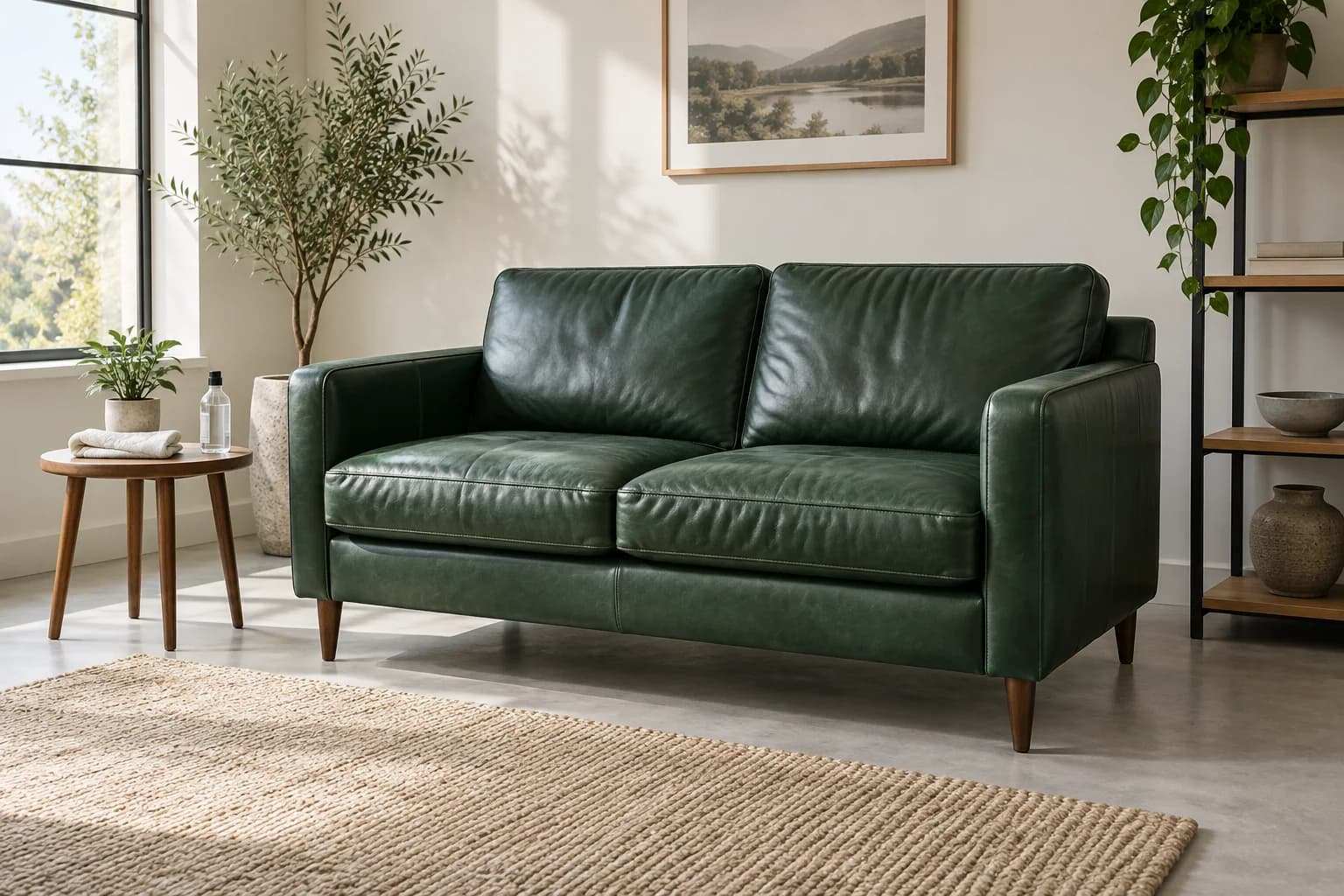
Most leather sofas need less product and less pressure than people expect. First find out whether yours has a protective finish. This guide is for smooth, pigmented upholstery with an intact coating. It is not a cleaning method for suede, absorbent aniline leather or a peeling synthetic surface.
Check the material first
Read the care label and the furniture maker's instructions. A consistent colour and smooth grain can suggest pigmented leather, but appearance alone is not conclusive. An absorbency check may provide another clue only if the manufacturer allows it: a tiny drop on an inconspicuous area should remain on an intact protective finish. Blot immediately. Water can mark absorbent leather, so skip this check on a valuable or uncertain piece and ask for advice.
See the leather type guide if your sofa feels velvety, changes colour when rubbed or absorbs moisture.
Gather a small care kit
Use a vacuum with a soft upholstery attachment, two clean white cloths, and a cleaner explicitly suitable for your sofa's finish. A white cloth makes it easier to notice colour transfer. Keep the product instructions nearby. Household degreasers, disinfectant wipes and washing-up liquid are not interchangeable with a leather cleaner.
Clean one section at a time
- Remove cushions where possible and vacuum seams gently. Do not drag a hard nozzle across the surface.
- Test a small amount of cleaner on a hidden area. Let it dry completely before judging colour, sheen and feel.
- Apply cleaner to a cloth or applicator as directed, rather than soaking the sofa. Use light overlapping passes.
- Work evenly across a panel. Repeatedly scrubbing the darkest spot can create a visibly different patch.
- Remove residue with a fresh cloth according to the label, then allow the surface to dry naturally before use.
Stop if the surface becomes sticky, its finish lifts, or colour transfers noticeably. A stain that remains after gentle cleaning may be within the coating or leather. More force is not a diagnosis.
When cleaning is not the answer
A pale armrest with a different texture may have worn through its coating. Cleaner cannot put that colour back. A compatible colour restoration system may help on sound coated leather, but matching the colour, sheen and flexibility matters as much as covering the mark. Read our colour restoration kit guide before buying.
Peeling sheets that expose fabric are a different problem. See bonded leather and peeling coatings before attempting filler or colourant.
Keep the routine simple
Remove dust regularly, blot spills promptly and protect the sofa from concentrated heat and direct sunlight where practical. Use a compatible protector only if the furniture maker recommends it. There is no universal conditioning schedule for every sofa.
For manufacturer guidance on the distinction between cleaning and colour repair, see Geist's furniture care overview. Our steps above are general editorial guidance, not a report of a test on your particular sofa.