
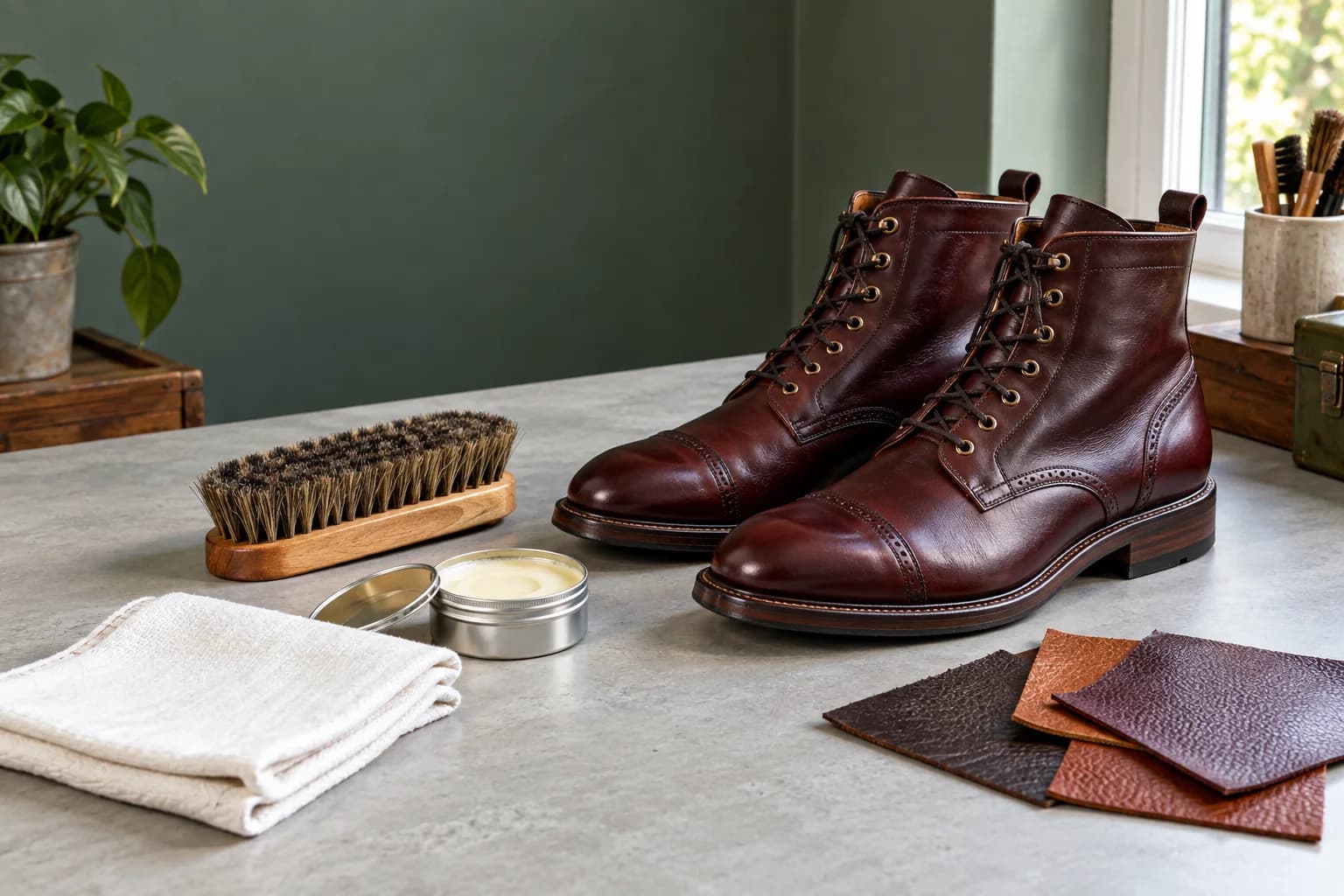
Welcome to The Saturday Repair, a short note from the Save My Leather editorial desk. For this first edition, the most useful advice comes before opening any bottle: identify the material and the problem.
One word is not a care instruction
Leather is a broad description. A sealed sofa finish, absorbent aniline hide and a fuzzy suede shoe behave differently. Even full grain describes a surface characteristic rather than an entire care routine.
Read the label, check the maker's advice and inspect a discreet area. Our leather type overview is a starting point, not a substitute for a manufacturer's specification.
Dirt and missing colour are different jobs
A dark mark may lift with appropriate cleaning. A pale, worn patch may be missing part of its finish. Scrubbing harder cannot restore a layer that is no longer present.
The sofa care guide explains how to start gently and when to stop. The colour restoration category guide covers the separate decision of choosing a compatible repair system.
A picture has limits
Our repair archive lets you compare supplied before-and-after photographs. A closed sole edge or brighter surface does not, by itself, establish the process or long-term durability.
That distinction matters when deciding what to try on your own belongings. Look for a recorded material, method and follow-up whenever a repair claims lasting performance.
A small task for this week
Find the care label on an item you use often. Take a clear photograph of it and keep that information with the product instructions you already have. Knowing the finish can prevent an expensive experiment later.
If a mark is still puzzling, send a question. Tell us what caused it and what has already been applied. A careful next step is more useful than a quick guess.